






Research on novel cements to reduce CO2 emissions

In August 2016, BRE published Performance and durability of concrete made using lower carbon belite-ye'elimite-ferrite cement (BR 512).
Concrete is likely to continue to be the primary volume construction material for most structural applications and its use is likely to grow. Portland cement (PC) and blended PCs are currently the only economic binders for concrete that can meet performance and durability requirements under the wide range of conditions to which concrete is exposed.
Cement manufacture produces large amounts of CO2 due to energy use and the calcination of CaCO3. Cement manufacture consequently accounts for about 5% of total global anthropogenic (human-generated) CO2 emissions.
The pressure to reduce energy consumption and CO2 emissions during cement manufacture has led the industry to increase substitution of Portland cement clinker in conventional cements with other ingredients approved for standard production, such as ground granulated blastfurnace slag (ggbs), pulverised-fuel ash (pfa or fly ash), natural pozzolans and limestone.
However, there have until recently been few serious attempts to develop novel cements based on alternative clinkers with intrinsically lower energy requirements and CO2 emissions than conventional Portland cement clinkers.
This new report summarises work on cements based, not on C3S (the major phase in PC), but C2S as the major phase, with C4A3$ (calcium sulfoaluminate or ye’elimite) and C4AF (ferrite) as the other two principal phases.
It specifically focuses on the LafargeHolcim-patented Aether cements as an example of this type of cement. These cements can be made from conventional raw materials, in existing industrial installations and offer similar performances to CEM I (ordinary) PC, but with 25-30% lower CO2 emissions.
The work summarised in the report was funded under the EU LIFE+ and SILC programmes to assess the performance and durability of Aether concrete. It shows that good-quality concretes can be made using a range of different batches of Aether cement. Specimens have been prepared to allow testing to continue over a number of years. To date, durability data for up to two years have been recorded.
Results have shown the following:
- Good-quality concretes can be prepared using Aether cement. The compressive strength of Aether concretes at lower water:cement (w/c) ratios at least matches that of otherwise equivalent PC concretes at test ages of up to two years.
- The dimensional stability of Aether concretes stored in water at 5ºC and 20ºC is comparable to that of otherwise equivalent PC concretes at test ages of up to two years.
- Aether concretes stored in air at 20°C show less drying shrinkage than equivalent PC concretes.
- Aether concretes have not shown signs of deterioration on exposure to sulfate solutions over two years of exposure. Otherwise equivalent PC concretes show significant deterioration on exposure to sulfate solutions.
- Aether concretes deteriorate on exposure to citric acid solution. However, the rate of deterioration is comparable to that of otherwise equivalent PC concretes. In both Aether and PC concretes, acid resistance increases with concrete quality and curing.
- Whilst the carbonation front in Aether concretes is less well defined than in PC concretes, the rate of carbonation of Aether concretes appears to be higher than that of otherwise equivalent PC concretes stored in similar conditions. Further tests will be required to assess whether there is any impact on the corrosion of embedded reinforcement.
- The gas permeability and chloride diffusion coefficient of Aether concretes are lower than those of otherwise equivalent PC concretes. These results are consistent with Aether concretes being durable, although other factors (such as exposure environment and mix design) need to be taken into account.
- A number of large reinforced concrete elements have been produced using Aether concretes. The elements were of good quality and will be stored on the BRE exposure site at an inland location in southern England to allow ongoing monitoring of performance.
- Specimens have been prepared to assess the susceptibility of Aether concretes to deterioration as a result of alkali– silica reaction (ASR) or delayed ettringite formation (DEF). Data available to date has not indicated a susceptibility to these processes, although the tests need to be continued over a longer period before conclusions regarding durability can be made.
To purchase the report, go to BRE Bookshop.
This article was originally published by BRE Buzz on 4 August 2016. It was written by Ali Nicholl.
--BRE Buzz
[edit] Related articles on Designing Buildings Wiki
- Aggregate.
- Alkali-activated binder.
- Alkali-activated binders for precast and ready-mixed concrete products: New supply chains, business models and environmental benefits.
- Alkali-silica reaction (ASR).
- BES 6001 Responsible sourcing of construction products.
- BRE Buzz articles on Designing Buildings Wiki.
- Cement.
- Concrete.
- Decarbonising concrete in the UK.
- High alumina cement.
- How scientists solved the riddle of cement’s structure.
- Mortar.
- Screed.
- Stucco.
- Sustainable materials.
Featured articles
Check out some of the best features and news from Designing Buildings as well as key stories from around the web.

Your guide to The Construction Reset at UKCW Birmingham.

Accommodating the Victorian and Edwardian working woman. Book review.
Rethinking passive fire protection in design

PFP demands the same level of design rigour as structure or services.

38% of Gen Zs feel safe when a fire door is wedged open.
Stunning images from around the world
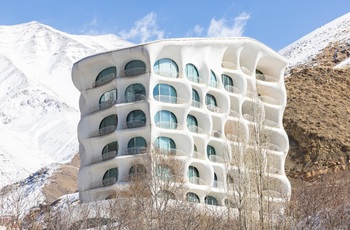
Shortlist for CIOB’s Art of Building photography competition.

Guidance for conversion of traditional pre-1919 stone buildings.
Industrial heritage in the Ruhr
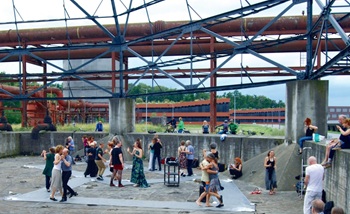
A marked difference to the fate of industrial landscapes in the UK.
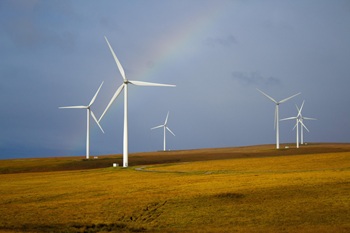
Communities will be able to build their own clean energy.
Why diversity and inclusion matters for SMEs

CIOB’s D&I Charter shows how practical changes can support long-term growth.
Cut electricity bills to power growth

Coalition sends joint letter to the Chancellor.

Gasholders: a history in pictures. Book review.
Recognition, influence and growth

SocEnv identifies three strategic pillars in new strategy to 2045.